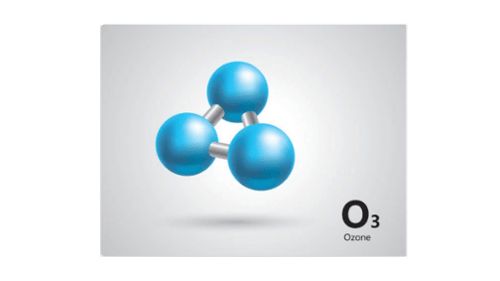
Ozone (O₃) is one of the most versatile tools in our biological dental toolkit. It's a powerful, naturally occurring antimicrobial that kills bacteria, viruses, and fungi without antibiotics or harsh chemicals — and it leaves only oxygen behind. We use it routinely, but in different ways depending on whether we're treating decay or gum disease.
For Cavities: Disinfect, Then Restore
When we treat a cavity, we use ozone — typically as a gas or ozonated water — to disinfect the tooth before placing a filling. Standard drilling removes the bulk of decay, but bacteria often remain in the tiny tubules of the dentin. Without a thorough disinfection step, these bacteria can fuel "secondary decay" beneath the restoration down the road.
Ozone is effective in treating pit and fissure, root, and interproximal caries, and one of its key advantages is removing the smear layer to expose dentin, which can then be supported by remineralizing agents. The honest caveat: a Cochrane review and a later meta-analysis concluded the evidence is still insufficient to confirm that ozone alone reverses or arrests existing caries. That's why we use it as a disinfection step alongside minimally invasive restorative care — not a standalone "ozone instead of a filling" treatment.
For Gum Disease: Where the Evidence Is Strongest
Ozone's strongest dental evidence is actually in periodontal care. It is highly effective against the key pathogens of aggressive periodontal disease, including Porphyromonas gingivalis, Aggregatibacter actinomycetemcomitans, and Tannerella forsythia. A 2025 systematic review found that combining scaling and root planing with gaseous ozone therapy produced superior periodontal response rates.
In practice, this looks like flushing periodontal pockets with ozonated water during cleanings, applying ozone gas to deeper pockets, and sending patients home with ozonated oils they can apply along the gumline between visits. The result is better bacterial reduction without antibiotics.
Why This Fits a Biological Approach
Ozone matches our philosophy because it's selective — it targets harmful microbes while sparing healthy tissue — and it adds nothing toxic to your body. For patients trying to minimize antibiotic use, avoid harsh chemical antiseptics, or simply support their body's own healing, ozone is one of our most useful tools.
Whether you're coming in for a routine cleaning, a filling, or active gum treatment, ask whether ozone makes sense for your visit. It's a small addition that can make a meaningful difference.