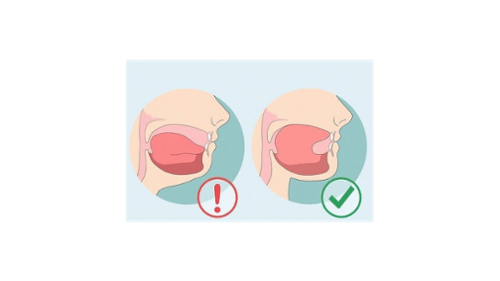
Quick — before you read any further, notice where your tongue is right now. Is it resting low, sitting on the floor of your mouth? Pressed against the back of your teeth? Or lifted gently up against the roof of your mouth? Most people have never thought about it. But that resting position turns out to be one of the quietly important things happening in your body all day long.
Here's the short version of what "correct" looks like: your tongue should rest lightly against the roof of your mouth, with your lips together and breathing through your nose. It sounds almost too simple to matter. It matters a lot.
Your tongue is a sculptor. The tongue is a strong, active muscle, and where it rests shapes the structures around it — especially as we're growing. When the tongue sits up on the palate the way it's meant to, it gently encourages the upper jaw to develop wide and open. When it rests low instead, that guiding force disappears, and the palate can develop narrow and crowded. The effects of tongue posture literally show up in the shape of your face and mouth.
It's tied to how you breathe. A tongue resting up on the palate goes hand in hand with breathing through your nose and keeping your lips sealed. A tongue resting low usually means an open mouth and mouth breathing — which affects your airway, your sleep, and even how rested you feel. One small position sets off a whole chain.
It connects to jaw tension, too. When the tongue and airway aren't in a good resting relationship, the jaw often compensates in ways that can lead to clenching and tension you may never connect back to the source.
Why we pay attention to this. Conventional dentistry rarely mentions tongue posture at all. But in biological dentistry, we're always looking for the why behind the symptom — and so often, the answer traces back to foundations like this one. The good news is that tongue posture can be assessed, and it can be improved, often with the help of myofunctional therapy. Noticing where your tongue rests is the first step.
So — where's your tongue right now? If the answer surprised you, it might be worth a conversation.
Curious about your tongue posture and what it means for your health? Ask us at your next visit, or call (281) 392-8450. Learn more at katietodds.com.
Beautiful Smile. Healthy You.